For decades, buying a home in Saudi Arabia was close to impossible for most foreigners. That changed on 22 January 2026, when the Law of Real Estate Ownership by Non-Saudis came into force. The detail, however, arrived later: the Council of Ministers only approved the law’s Executive Regulation and the official map of permitted areas on 23 June 2026. For a Muslim family weighing a move, the picture is now clear enough to plan around — though not without some loose ends.
What actually changed
The new law replaces a much narrower older regime and allows non-Saudis — individuals living in the Kingdom, individuals living abroad, and foreign companies — to own property, subject to approval and registration. Applications go through a single government portal, Saudi Properties, run by the Real Estate General Authority (REGA). Residents apply with their iqama number; non-residents must first obtain a Saudi digital identity, open a local bank account and register a Saudi mobile number.
The regulation also sets the cost of doing so. A 2% fee applies to property transactions by non-Saudis in Riyadh, Jeddah, Makkah and Madinah, for residential and commercial property alike. The law itself allows REGA to charge up to 5%, so the current rate could in principle change. Breaches of the law can attract fines of up to SAR 10 million.
Where foreigners can buy
Ownership is not nationwide. It is confined to designated geographic zones set out in an official document on the Saudi Properties platform. According to reporting by Enterprise, the map gives Jeddah 57 zones, AlUla 17, Makkah 12, Madinah 10 and Riyadh nine.
- Riyadh: almost entirely the large master-planned projects — Diriyah Gate, New Murabba, Qiddiya, King Salman Park, Sedra, King Abdullah Financial District, the Sports Boulevard and Arts District, the King Salman International Airport area and transit-oriented development sites.
- Jeddah: the city centre plus numbered development zones across the governorate — by far the broadest choice.
- Elsewhere: AlUla, and giga-projects and special economic zones such as NEOM and the Red Sea developments.
REGA has said more zones may follow, but has given no timetable. In practice, a family hoping for an ordinary villa in an established Riyadh neighbourhood will not find one inside the zones.
The resident’s exception — and the Holy Cities
The most useful rule for families is the one aimed at people who already live there. A non-Saudi legally resident in the Kingdom may own property inside the zones and also one residential property for personal use outside them. Someone living abroad is limited to the zones. Several reports say the regulation treats a resident’s spouse and children as part of the same household for this purpose; the precise family rules are worth confirming on the portal or with a lawyer before you rely on them.
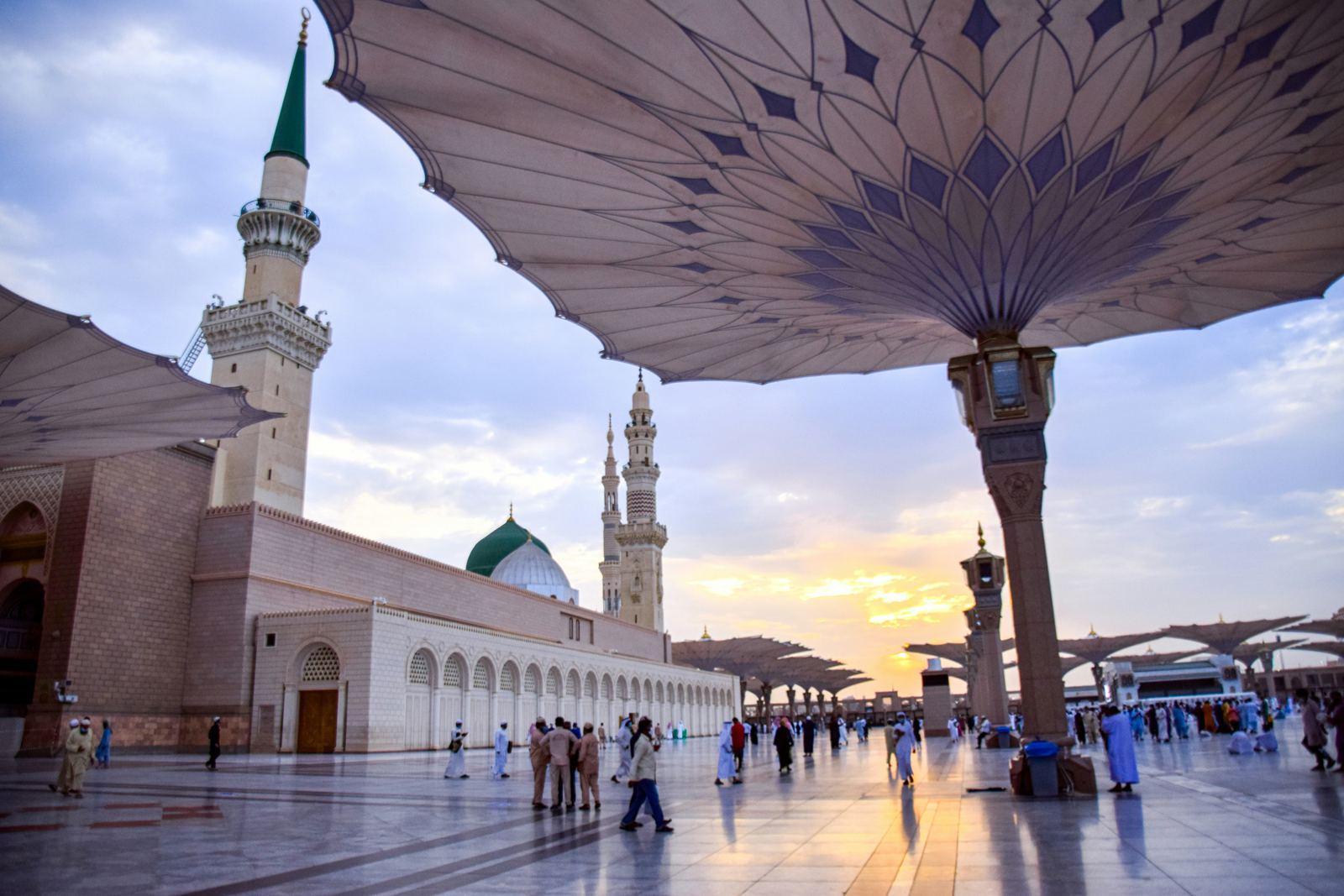
Makkah and Madinah are handled separately. The outside-zone exception does not apply there. Within the designated zones of the two Holy Cities — including projects such as Jabal Omar, King Salman Gate and Masar in Makkah, and Darat Al-Hijra and Downtown Madinah — ownership is open only to Muslim individuals, whether they live in the Kingdom or not, and to Saudi companies under specific conditions. For many readers this is the headline: a Muslim in Birmingham or Toronto can, for the first time, buy a flat near the Haram in their own name.
Premium Residency and the Riyadh rent freeze
Ownership is not residency. Buying a home does not by itself give you the right to live in Saudi Arabia. The route that links the two is the Real Estate Owner category of Premium Residency, introduced in January 2024. It requires residential property worth at least SAR 4 million, free of any mortgage, and carries a one-off application fee of SAR 4,000; the residency lasts as long as you keep the qualifying property. Premium Residency also removes the expat and dependants’ levies and the need for a sponsor.
How the 2024 category and the 2026 law fit together is not yet spelled out in public. Before the regulation, law firm BCLP flagged this as an open question; Fragomen now describes the property as needing to sit “within designated areas”. We have not found an official statement settling, for example, whether a resident’s single home outside the zones could count. Ask the Premium Residency Centre directly.
Renting remains the default for most new arrivals, and in Riyadh that has become more predictable. From 25 September 2025, rent increases on residential and commercial property inside the capital’s urban boundary were frozen for five years. Vacant units must be re-let at the last registered rent, all leases must be registered on the Ejar system and renew automatically unless either side gives 60 days’ notice, and landlords face fines of up to 12 months’ rent for breaches. The government has said similar measures could be extended to other cities.
What this means for you
- Rent first, buy later. The resident’s exception rewards those already living in the Kingdom with a valid iqama. A year or two of renting — protected, in Riyadh, by the freeze — lets you learn the city before choosing your one home outside the zones.
- Treat Makkah and Madinah as a separate decision. Being able to own near the Haramain is a real blessing for some families, but it is a premium market in a limited set of projects, and it does not by itself give you residency.
- Budget for the 2% fee, valuation and legal costs, and check mortgage availability with a SAMA-licensed lender — the REGA platform does not handle financing.
- Don’t assume a SAR 4 million purchase guarantees residency until the Premium Residency Centre confirms the property qualifies.
- Verify everything on the official portal. The zones and fees are new and may still change; this article is a guide, not legal advice.
For cost of living, visas and schooling, see our Saudi Arabia guide.
Quick answers
Can a foreigner who does not live in Saudi Arabia buy property there?
Yes, since 22 January 2026, but only inside the designated geographic zones published by REGA, such as Jeddah's development zones and Riyadh projects like Diriyah Gate, New Murabba and Qiddiya. Non-residents need a Saudi digital identity, a local bank account and a Saudi mobile number.
Can a non-Saudi Muslim buy a home in Makkah or Madinah?
Yes. Muslim individuals, whether resident in the Kingdom or abroad, may own property within the designated zones of Makkah and Madinah. The resident's exception for one home outside the zones does not apply in the two Holy Cities.
Does buying property give me residency in Saudi Arabia?
Not automatically. The Real Estate Owner category of Premium Residency requires mortgage-free residential property worth at least SAR 4 million and a SAR 4,000 application fee. How it interacts with the 2026 law is not fully spelled out publicly, so confirm with the Premium Residency Centre before buying.
Sources
- Non-Saudi Property Ownership System Enters into Force as of Today — Real Estate General Authority (REGA), 2026-01-22
- Real Estate Ownership by Non-Saudis: Law now published — BCLP, 2025-07
- Foreigner real estate ownership changes given Cabinet approval, enhancing Saudi competitiveness — Arab News, 2026-06
- Asharq Al-Awsat Reveals Details of Executive Regulations for Non-Saudi Property Ownership — Asharq Al-Awsat, 2026-07-02
- REGA leaves door open on more foreign-ownership zones, but won't say when — Enterprise, 2026-08-13
- The Kingdom of Saudi Arabia Publishes Implementing Regulations to the Foreign Ownership of Real Estate Law — Greenberg Traurig, 2026-07
- Saudi Arabia adds five new products to its Premium Residency program — Arab News, 2024-01
- Saudi Arabia announces rent freeze in Riyadh for five years — Gulf News, 2025-09
Diyār articles are general information, checked against the sources above on 8 October 2026. Rules change often — confirm with official sources or a qualified adviser before acting.