— A glimpse of Saudi Arabia —
Photographs from Unsplash, used under the Unsplash License.
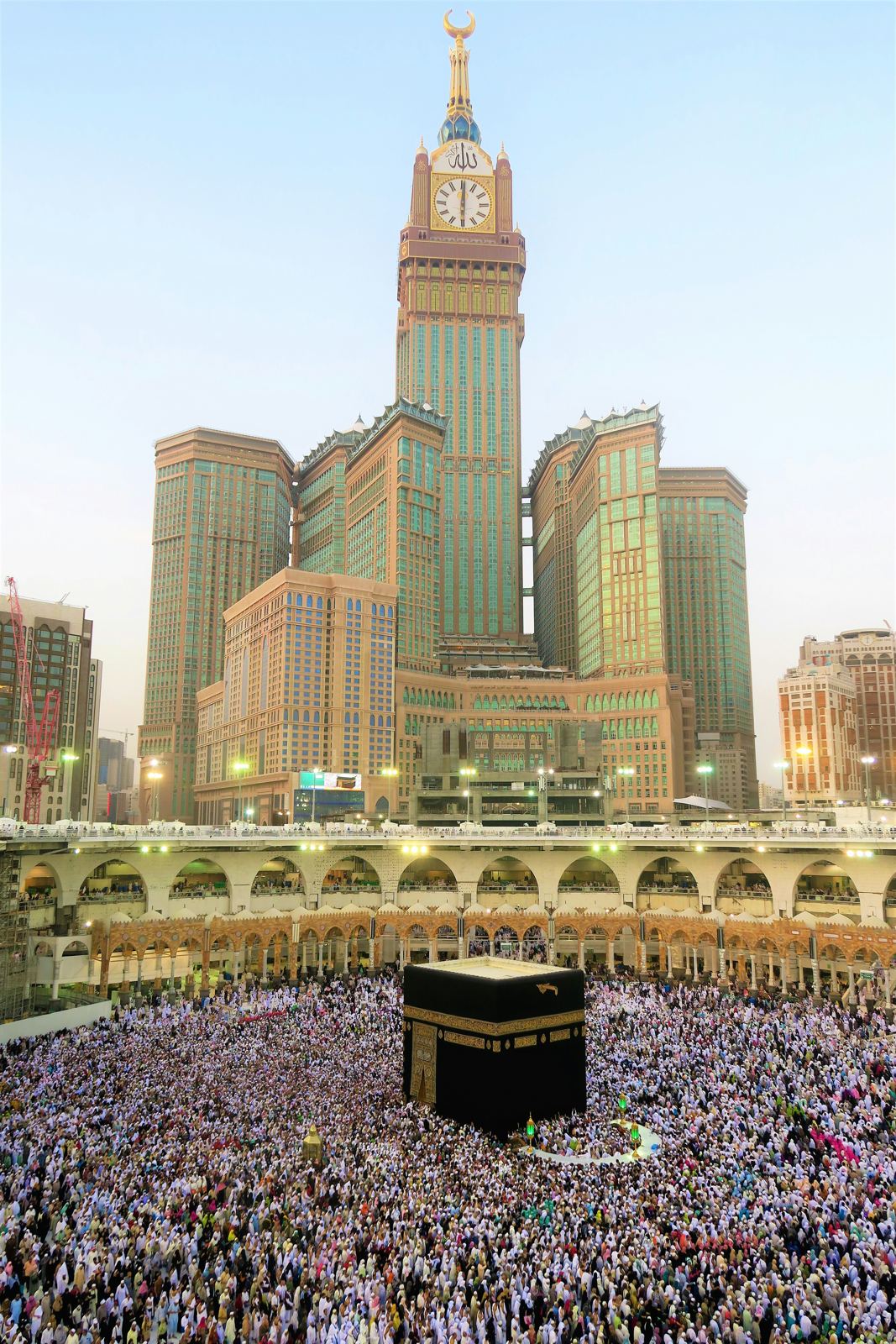
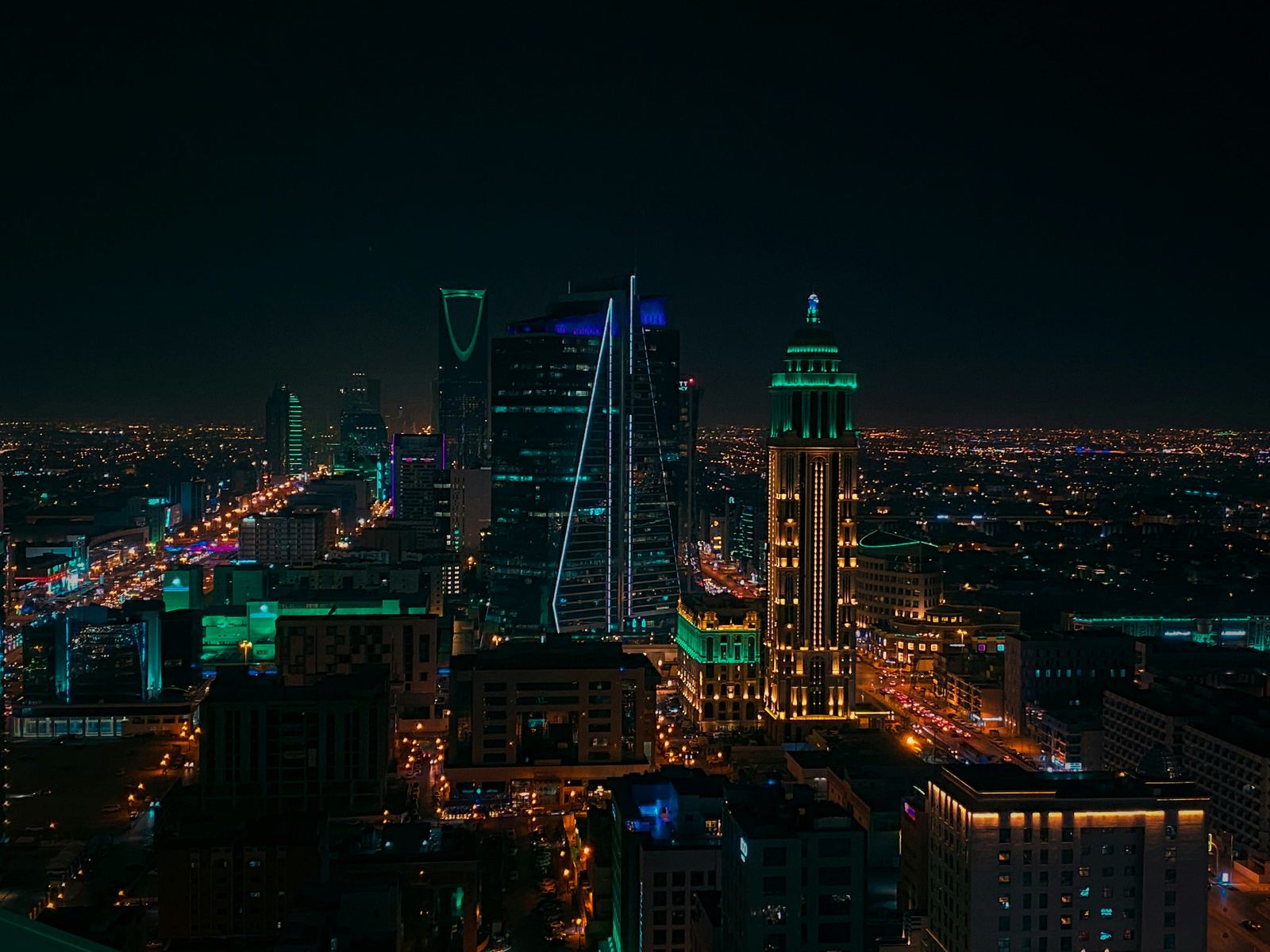
Home of the Two Sanctuaries — and, post-Vision 2030, the most ambitious transformation in the Muslim world.
Photographs from Unsplash, used under the Unsplash License.
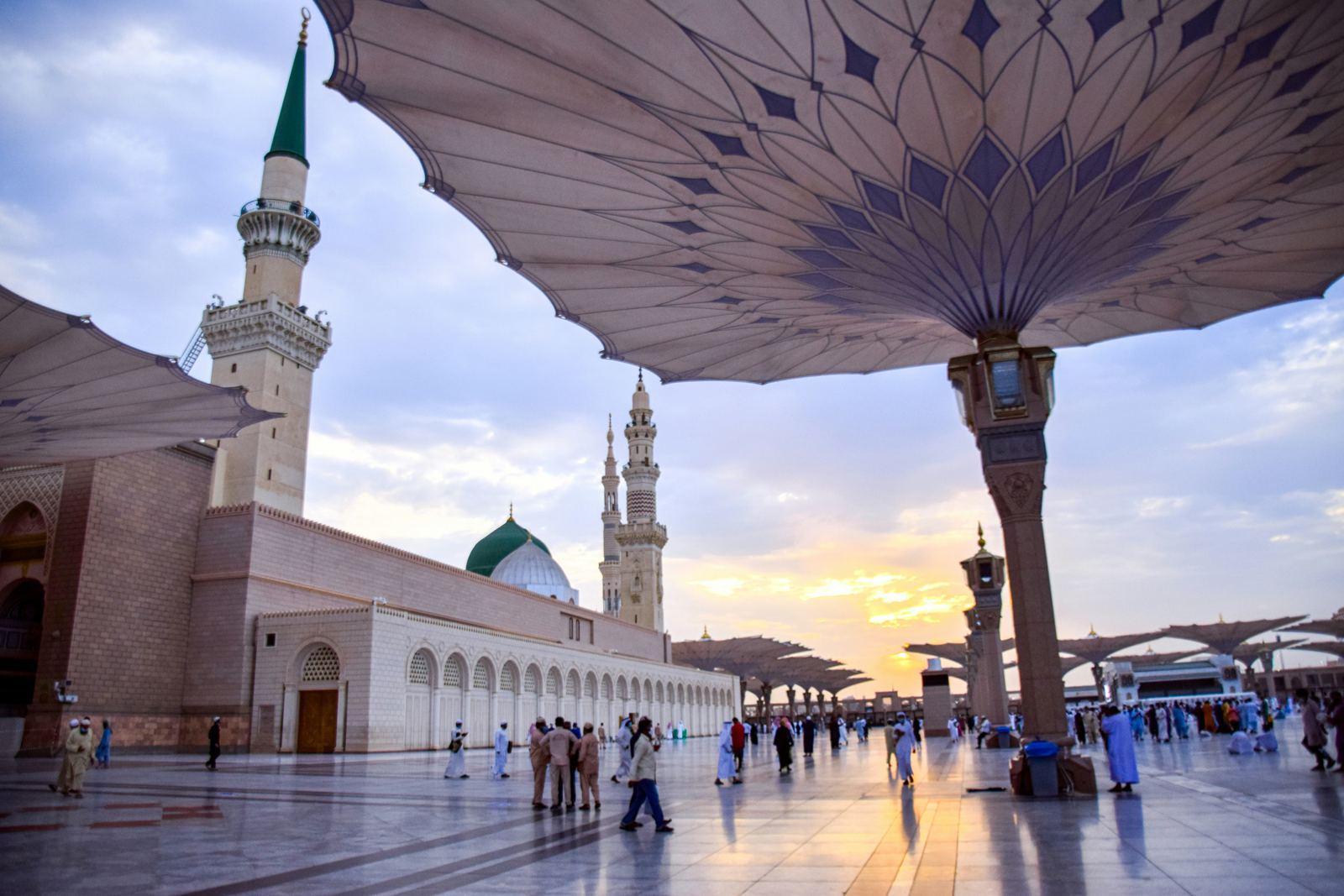
Deeply embedded in public life. Saudi is the spiritual heart of Islam — home to Makkah and Madinah, accessible by car for residents. The adhan halts businesses; prayer times shape every day. Friday is the central weekly event.
Recent reforms softened public moral enforcement (Mutawa significantly reduced since 2016) while preserving the Islamic legal framework. The country is opening socially while remaining religiously rooted — cinemas, music, mixed dining returned; pork, alcohol, public non-Islamic worship remain prohibited.
For Sunni Muslims of most schools, religious life is uncomplicated. Shia communities exist primarily in the Eastern Province.
Historically restrictive, now dramatically liberalized.
Citizenship exceptionally rare for non-Arabs and not a realistic goal.
Saudi citizenship for non-Arab Muslims is extraordinarily rare. Even Premium Residency (the closest equivalent, granting near-citizen privileges) does not lead to a Saudi passport.
There is no published naturalization track for ordinary residents. The few cases of conferred citizenship typically involve decades of service, marriage to a Saudi citizen (with significant additional conditions), or exceptional national-interest decisions by royal decree.
For nearly all foreign Muslims, the realistic ceiling is Premium Residency — permanent for SAR 800K (~$213K), or renewable annually — which provides property ownership, business setup without local sponsor, and family stability. Consider that the destination, not citizenship.
No personal income tax. Businesses owned by Saudi and GCC nationals pay Zakat (2.5% of the zakat base) instead of corporate income tax; individuals are not assessed.
| Tax | Rate |
|---|---|
| Personal Income Tax | 0% |
| Corporate (non-GCC owned) | 20% |
| Zakat (Saudi / GCC-owned businesses) | 2.5% |
| VAT | 15% |
| Capital Gains (non-residents) | 20% |
Withholding tax (5–20%) applies to certain payments to non-residents.
| From | Round-Trip Economy (avg) | Flight Time |
|---|---|---|
| New York | $950 – $1,300 | ~12.5h direct (Saudia) |
| London | $500 – $750 | ~6.5h direct |
| Frankfurt | $450 – $650 | ~5.5h direct |
Saudia is the national carrier; Riyadh Air launched 2025. Cheaper options via Turkish Airlines or Gulf carriers.
Under the Non-Saudi Real Estate Ownership Law (in force January 2026), foreigners can buy in designated zones (including parts of Riyadh and Jeddah), and legal residents may also own one home for personal use outside the zones. Makkah and Madinah remain restricted, open only to Muslims under special conditions. Premium Residency holders also have property rights.
| Property | Riyadh | Jeddah | Dammam / Khobar |
|---|---|---|---|
| 2BR Apartment | $160K – $320K | $110K – $230K | $100K – $200K |
| House / Villa | $300K – $800K | $250K – $700K | $200K – $500K |
| 2BR Rent / month | $1,000 – $2,200 | $700 – $1,500 | $600 – $1,300 |
| Land (per sqm, urban) | $400 – $2,000 | $300 – $1,500 | $200 – $1,200 |
Where you settle within a country matters as much as the country itself. Each city has its own pace, religious texture, expat density, and cost.
The capital and economic heart. Vision 2030 epicenter, fastest-growing job market, vast city, dry desert climate.
Gateway to Makkah, on the Red Sea. More cosmopolitan than Riyadh, milder coastal weather, deep merchant history.
The Prophet's city ﷺ. Tranquil, deeply spiritual. Limited foreign work but rich religious environment.
The holiest city in Islam. Living here is a profound choice with logistical constraints. Closed to non-Muslims.
Eastern Province twin cities. Oil industry hub, relaxed feel, connected to Bahrain by causeway.
Mega-projects under construction. Future tech, tourism, and lifestyle hubs but still emerging.
The websites Muslims and locals actually use to buy, rent, and browse. Beware foreigner-targeted brokerages — local-language portals usually show truer market prices.
Saudi Arabia ranks much higher than five years ago. Vision 2030 reforms removed the Saudi-partner requirement for many sectors.
Bank account opening tightened; expect substantial KYC. Saudization quotas (Nitaqat) require hiring Saudi nationals as you scale.
The hottest job market in the Muslim world right now thanks to Vision 2030.
Saudization increasingly strict in low-skill roles; high-skill foreign hires still welcome.
English is the working language of business, finance, mega-projects, healthcare, international schools. Conversationally common in Riyadh, Jeddah, Khobar — especially among younger Saudis.
However, government offices, smaller businesses, restaurants, and rural areas operate in Arabic. Many official forms, court proceedings, and tenancy contracts are Arabic-only. Learning at least functional Arabic significantly improves daily life.
International school sector growing rapidly to match expat influx.
| Curriculum | Typical Fees (annual) |
|---|---|
| British (KAUST, Multinational, BISR) | $8,000 – $20,000 |
| American (ARS, ASD, Continental) | $10,000 – $25,000 |
| IB (Riyadh Schools, Manarat) | $8,000 – $18,000 |
| Saudi National (Arabic, strong Islamic curriculum) | $1,500 – $5,000 |
| Pakistani / Indian international | $2,000 – $6,000 |
Universities: King Saud University, KAUST (English-language research powerhouse), King Abdulaziz, Prince Sultan, Effat University.
Saudi cuisine is Bedouin at its core — whole lamb slow-cooked over fire, rice heaped with saffron and dried fruit, flatbreads shared from a communal platter. Hospitality is the organizing principle; a guest who leaves hungry is a host's failure. Halal is not a consideration here — it is simply the air.
Restaurants operate until 2–3am and family sections are universal. Saudi coffee — qahwa — is cardamom-scented and served in small cups alongside dates before any conversation turns to food. Budget meals cost $3–8; mid-range $10–25. The restaurant scene in Jeddah and Riyadh has expanded dramatically under Vision 2030.
Jeddah brings a Red Sea seafood tradition to Gulf cooking; the southwestern Asir region eats differently — honey-drizzled flatbreads, slow-cooked highland lamb, and a distinct mountain table.
Since January 2026 non-Saudis can buy property in designated zones, with extra rights for residents and Muslim-only access in Makkah and Madinah.
Read →
Türkiye, Egypt and Jordan still sell passports — on new terms. The Gulf sells long residency instead. A calm look at the figures and the catches.
Read →Compare it side-by-side with other destinations, or read about a different country before deciding.